Thursday, 12 December 2013

The Kite Runner-final post


The Kite Runner
Final Post
Kendra Wragg                                             
December 12, 2013

6. I think Amir’s reaction to the situation where Rahim asks him to go to Afghanistan to rescue Sohrab as his last wish was realistic. I believe his initial reaction of fear of returning to a country in war is how any human being would feel. Eventually Amir decides to go which I believe is remarkable. I think this action was the best thing he could have possibly done for himself, for Rahim Khan and for Hassan. Amir knew his secret of betraying Hassan as a child was eating away at him on the inside. He realized “I became what I am today at the age of twelve, on a frigid overcast day in the winter of 1975. I remember the precise moment, crouching behind a crumbling mud wall, peeking into the alley near the frozen creek. That was a long time ago, but it’s wrong what they say about the past, I’ve learned, about how you can bury it. Because the past claws its way out. Looking back now, I realize I have been peeking into that deserted alley for the last twenty-six years.” This action of returning to Afghanistan not only changed Sohrab’s life, but Amir’s as well. He may have made a mistake, but this opportunity gave him the chance to be happy again and to turn his life around forever. I would like to think I would have done the same in this situation, however I don’t believe I would know how I would react until I was in the situation. If I was Amir I would probably realize that I would never be able to forgive myself for betraying Hassan especially because Hasssan was so loyal to Amir and always said to him, “for you a thousand times over.” I think I would realize this is the one chance to be able to forgive myself, change a child’s life, and with that be able to move on with my own life and be happy once again.

9. I would highly recommend the book “The Kite Runner” to other readers for the following reasons. The Kite Runner is a very powerful novel that gives readers a perspective of the immense struggles others face in other parts of the world. I believe this book has many very valuable messages in it, including how one action can change your life forever but “there is a way to be good again.” It teaches us to not take life for granted, and to be grateful for the country we live in and the rights we have as individuals. “It may be unfair, but what happens in a few days, sometimes even a single day, can change the course of a whole lifetime…” I found this book to be a great read and made me question my own ability to stand up for what I believe in, even if it means risking my life. This novel reinforced to me that there is nothing more important in our lives than our family and friends, and no material item or title can ever surpass that. I would recommend this novel to the type of person that enjoys learning about other cultures, has an open mind to seeing life through a different perspective, and who enjoys a captivating, powerful and inspirational read. This novel explores the cultural, political and relationship issues faced by a young boy in Afghanistan during a time of war. The Kite Runner forces us as readers to think about our own values and morals and teaches us that with every challenge there is a way to overcome it. Our strength to overcome these challenges ultimately decides our future. The Kite Runner by Khaled Hosseini is a very powerful novel that keeps you turning the pages until the very end.

Thursday, 5 December 2013

The Kite Runner- Halfway Post


Kendra Wragg
December 3, 2013
The Kite Runner- By Khaled Hosseini
Halfway Post


2. One problem that Amir faces throughout his childhood is to win Baba’s (his father’s) praise, and to make him proud. During his life Amir doesn’t feel Baba is proud of him, as if he hasn’t been a good son. This is an ongoing problem for Amir as he desperately wants to feel loved by his father. . “He needs someone who …understands him, because God knows I don’t. But something about Amir troubles me in a way I can’t express. It’s like…if I hadn’t seen the doctor pull him out of my wife with my own eyes, I’d never believe he was my son.” (Pg.24) This is so important to Amir that he does everything possible to get that. He puts Hassan in danger so that he can bring home the kite to Baba hoping that will finally make him proud of his son. “Then I saw Baba on our roof. He was standing on the edge, pumping both of his fists. Hollering and clapping. And that right there was the single greatest moment of my twelve years of life, seeing Baba on that roof, proud of me at last.” (Pg.71) He lies to Baba, and makes it look like Hassan stole from Amir in hopes that Hassan and Ali will leave. That way Amir will have Baba all to himself “Nothing was free in this world. Maybe Hassan was the price I had to pay, the lamb I had to slay to win Baba.” (Pg.82) I don’t have a personal connection to this problem faced by Amir, however it reminds me of the movie the Social Network. These two examples have similar problems faced by the main character because both Amir, and Mark Zuckerberg (The Social Network) both want something really badly. Amir wants the love of his father, and Mark wants to create a very successful social networking site. It becomes apparent through both of these stories that they are willing to step on others toes in order to get there. For Amir, Hassan is the “lamb he had to slay,” while for Mark the Winklevoss twins are the ones he had to slay by steeling their idea in order to achieve what he wanted.


4. One main theme that I am beginning to see emerge is the quest for redemption. Amir is not only trying to redeem himself for what he did to Hassan and the tremendous guilt he feels towards that, but he is also trying to redeem himself to Baba for feeling as though he isn’t a good enough son. Amir struggles to feel loved by Baba his whole childhood. He thinks Baba is mad at him for killing his mother during birth and doesn’t think he is living up to be the person Baba is. With Hassan, he feels guilty for not standing up for him the day he was raped, teasing him and not always being nice to him despite the fact that Hassan was like a saint to Amir. But ultimately sacrificing Hassan so that Amir could win Baba’s love.  “I remember the precise moment, crouching behind a crumbling mud wall, peeking into the alley near the frozen creek. That was a long time ago, but it’s wrong what they say about the past, I’ve learned, about how you can bury it. Because the past caws its way out. Looking back now, I realize I have been peeking into that deserted alley for the last twenty six years.” (Pg.1) “I thought about something Rahim Khan said just before he hung up, almost as an afterthought. There is a way to be good again.” (Pg.2) Another movie/book where one of the themes is redemption, is “The Last Song.” This book displays this theme through the character of Ronnie. For years she ignores her dad’s letter’s after her parents divorce, and when she goes to visit him in the summer she treats him terribly. Near the end of the novel, her dad becomes terminally ill. Ronnie then feels tremendous guilt for severing the relationship with her dad, knowing in a short time he will be gone. She spends the rest of the time she has left rebuilding their relationship. These two novels both have a similar of redemption, because in The Kite Runner, Amir severs the relationship with Hassan by not standing up for him and treating him terribly. He then spends the rest of the novel trying to rid himself of the guilt he feels by rescuing Hassan’s orphaned son. In The Last Song, Ronnie spends the last few months she has with her dad making up for the past years that she would not speak to him in hopes of redeeming herself for how she treated her terminally ill father. 

Monday, 25 November 2013


Introductory Blog

The Kite Runner                                                                                                   Kendra Wragg
By: Khaled Hosseini                                                                                             November 26,2013
Copyright 2003
Published by Anchor Canada 2004
391 Pages
Synopsis
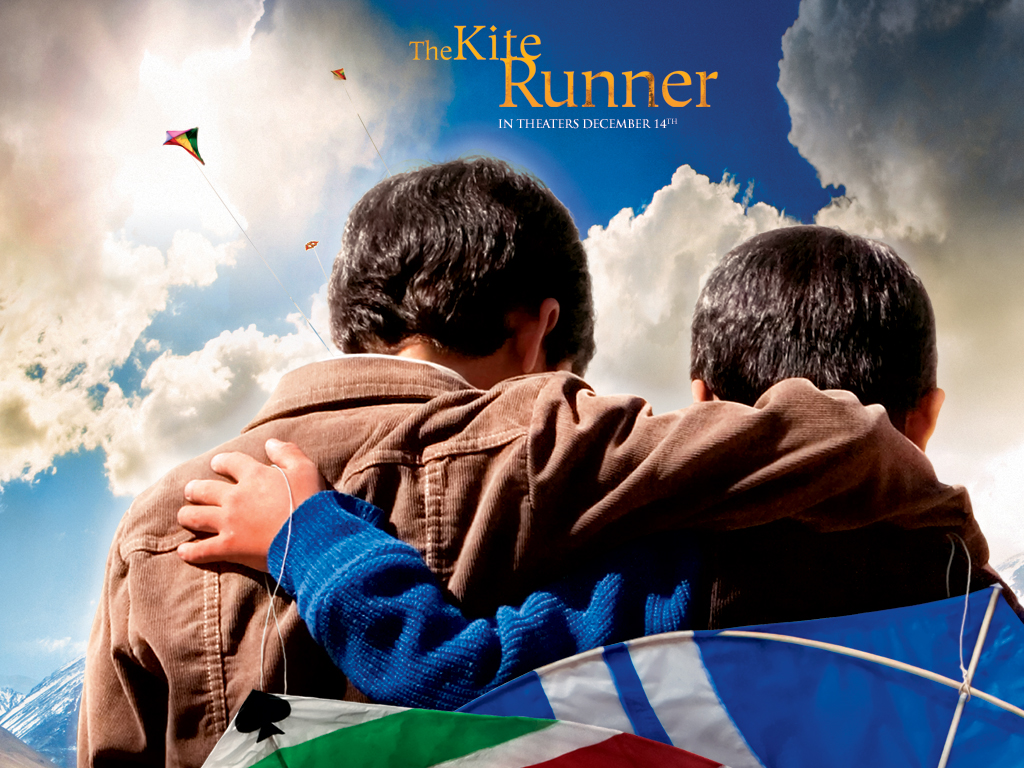
The novel “The Kite Runner” by Khaled Hosseini is about the story of a young boy’s journey through life in Kabul, Afghanistan. His name is Amir. The King of Afghanistan is overthrown which leaves the country in a state of war. Amir grows up with his father and servant’s son (Hassan) who although is a Hazara; he is like a brother to Amir. “Their uncommon bond is torn by Amir’s choice to abandon his friend amidst the increasing ethnic, religious, and political tensions of the dying years of the Afghan monarchy, and apparently dissolved when Amir and his father flee to California to escape the Soviet invasion, leaving Hassan and his own gentle father to a terrible fate.”[1] Throughout their childhood Amir and Hassan fly kites together, it is their only sense of freedom during a time of war. But when Amir watches Hassan being raped his life changes forever. From that day on Amir is not able to get rid of the guilt that remains from leaving Hassan to have his innocence stripped from him. Years later he gets a call from a friend in Pakistan who tells Amir, “there is a way to be good again. And Amir journeys back to a distant world, to try to right past wrongs against the only true    friend he ever had.”[2]

Link to book review:


I chose to read the novel “The Kite Runner” because I have previously read it and found it to be an extremely powerful novel with many messages and captivating moments that make you think hard about your own beliefs, morals and values. It is a very inspirational novel, and has so much meaning beyond the written words in the novel. I am interested to read this book to gain more insight about the harsh realities of life in Afghanistan, and the ability to overcome immense challenges in order to put one’s life back together. I believe this novel has the ability to provide a new perspective on life, through the eyes of a young boy in Afghanistan during the 1970s.


[1] Book cover of The Kite Runner, by Khaled Hosseini
[2] Book cover of The Kite Runner, by Khaled Hosseini